Saturday, February 13, 2016

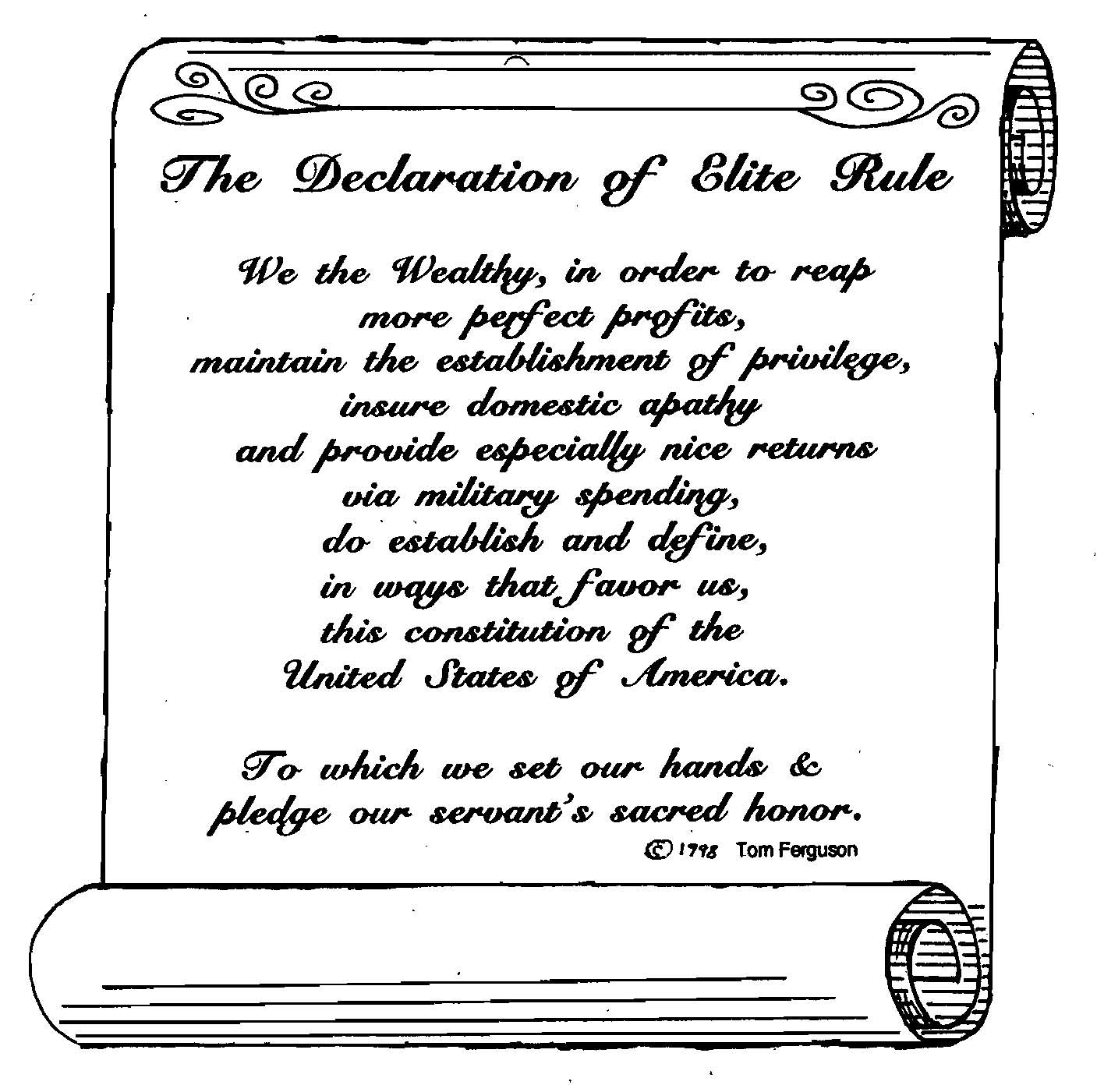
The Grand Old Party Animal


 In my neighborhood rats are quite timid and though definitely there, are little seen. In my wanderings I've noticed that when these creatures become bold as squirrels and many in number, and the cats are correspondingly few, it is time to take prudent measures.
     In my wanderings I've also noticed certain elite urban country clubs. Though all are exclusive, in a way of speaking, they are of varied affluence. They occur in many neighborhoods in the cities and plains of our great world and are named according to local vernacular ie, Gentlemen's Societies, Daughters of the Confederacy, Associations for the Adancement of White People, Chambers of Commerce, Nationalism, Plutocracy, Fascism etc; Some have evolved out of elite but “moderate” organs, exploiting whatever respectability the former organization once held but instituting a more rigorous mission statement. Republican National Headquarters and local affliliates are a prime example of this latter group. Some might argue that the respectability associated with this party is quite meager, citing as they might, an earlier acronym used in one of their campaigns – CREEP, the Committee to Reelect the President – but I think most sober observers would admit to at least a noticeable tightening of the mission statement since those heady days.

      The Mafia is to the 1% as the Republicans are to the Democrats, that is, not exactly the same but similar. A high government official for example would sadly accept a medical professional's good faith failure to save a loved one whereas the gangster Don might use violence and threats, his primary vocational tools, to promote successful treatment and death to punish failure. But in matters of domination and control, it is perfectly accurate to compare, say a small business in the hood failing to pay “protection” money to the mob and a small country in the 1%'s government's self-declared “back yard” who attempts an alternative to “market forces”. This comparison is not apparent to the general population due to the government's employer, the 1%, who exercise disproportionate influence via their ownership of the mainstream media, their financing of political campaigns, their presence on the boards of our institutions and of course corporations. This control allows propagation of fairy tale narratives regarding the beneficient nature and superiority of the “homeland”, especially its foreign policy. The zealotry of the faction among the 1% which advocates more or less total domination has gradually come to the fore, starting most enthusiastically with Ronald Reagan's presidency, a hired gun if there ever was one. But he seems quaintly moderate by comparison to what has evolved since. This faction would mark Reagan's ascendency as the point where recovery began from the limitations imposed by the New Deal. The 1% hated Roosevelt and his programs in his time and their descendents inherited a determination to roll them back. 

     The Democratic party has responded to these forces generally by becoming “New Democrats”, ie, Bill Clinton, The “moderate” element in the GOP, pushed mostly aside, worried that the zealots were going too far. Not that they objected to the wealthy having it all on principle. No, their objection was pragmatic. They argued that a buffer was needed between the rulers and the rabble, a nice affluent middle class, the ones who vote and maintain a respectable illusion of democracy. If things get bad enough, they fear, the voters will start listening to the socialists. The zealots were having none of it and the appeal of the candidacy of Bernie Sanders is one of the consequences.

      Stangnant wages, insecurity, unemployment... all conditions the 1% seem intent on normalizing for U.S. workers. A parallel condition ensues where, as Bernie Sanders points out, bankers swindle millions of people out of their pensions and savings and are, at worst, fined while someone who doesn't wear a three-piece suit spends serious time in prison for smoking marijuana. The National Security state breaks numerous laws spying on citizens, and the Department of Justice viciously goes after the whistle blower, Edward Snowden in this example, while the NSA lawbreakers continue business as usual, with promises to be nice. The perpetrators of an illegal, brutal and incredibly expensive invasion lie to congress and the people to justify it, killing hundreds of thousands of civilians and creating chaos in the middle east. Their punishment? They are honored with high honorariam speaking engagements and consulted by the 1%-owned media for their “expertise.” Meanwhile a courageous Chelsea Manning exposes some of their murderous behavior and is rewarded with a brutal arrest and impossibly long prison term. Again, the candidacy of Bernie Sanders is one of the consequences of this hypocrisy. Was it Lincoln (or Dylan?) who said, “You can fool all of the people some of the time, and some of the people all of the time, but you can't fool all of the people all of the time.”

Monday, January 18, 2016

A Subversive Activity - reading

In an earlier post I mentioned that I had, via Christopher Hitchens' essays And Yet..., discovered Henrich Heine (whom I had never heard of) and Edmund Wilson (actually I had been aware of him thru Gore Vidal so re-discovered)... well, I have now spent more time with HH and can report that that guy (1797-1856) was a cinematic writer, one who in turns can inspire one to pen and to despair (at one's own feeble efforts). We have the handy word master to apply to folks like that. Florentine Nights, I'd heard of it only vaguely. The narrator returns again and again to visit a dying young woman, pale, bed-ridden and delicate. To persuade her to follow doctor's orders to ly as still as possible, he tells her stories which he presents as from his own life. This is the device he uses to ty the tales together in what might otherwise be a collection of short stories. In another, Ideas – Book Le Grand, he addresses the reader as Madame at the beginning of each chapter, as if talking with or writing to a friend. It eventually evolves to an homage to Napoleon which, like Beethoven's Emporer's Concerto, he came later to repent.

    Heine was famous in his time and quite successful. As I've found reading early writers like Dickens, Rousseau, Voltaire, I'm amazed at how unexpectedly modern they seem. And how so many phrases and sayings I took to be of recent vintage either originated with these writers or were commonplace in their time. I picture the life around them, what was going on: in the U.S., relations with Native Americans were approaching genocide, slavery was perfectly legal, the barbarity in the western U.S. toward animal, vegetable and mineral was pretty much unlimited, women couldn't vote, petty and not so petty wars raged between the great European powers, England, France, Germany... the French Revolution, Napoleon's megalomania (and forced spreading of egalite and liberte). The ruthless cruelty of colonialism was in full swing and... well, plumbing was pretty primitive. But on the other hand there was Handel, Beethoven, Mozart, Ingres, David, Gros, Delecroix, Manet, Goya, Darwin,... and Morse Code, Electricity,... and Heine, who has been compared to the literary giant Goethe whose book
Wilhelm Meister's Apprenticeship was listed by Schopenhauer as one of the four greatest novels ever written, high praise indeed and heady company. BTW claims for the greatest novel have also been made for George Eliot's, Middlemarch. I've only tasted it but can vouch for the superb writing. But back to Heine – what attracted me was Hitchens describing him as a wit. I was in the mood for some laughs. A chuckle is a healthy thing for the ol' bod. Well, that was there all right, a bit Mark Twain-ish maybe. It could be that it doesn't translate well but I found David Sedaris a lot funnier, and Twain of course is the master.

    Edmund Wilson's,
To the Finland Station, is a survey, from 1930, of left thinking up to that time, from Michelet to Marx and Lenin. The hysteria conducted by the 1% toward this view, threatened as they were by its call for sharing, attempts to make damned sure that the average person won't go there in their reading or thinking. But Wilson is a remarkable intellectual so fears not thought. You don't have to agree with every paragraph but this is a good place to explore the seriousness of that historical movement.
    His
Axel's Castle explores imaginative literature from 1870 – 1930, Yeats, Paul Valery, T.S. Eliot, Proust, Joyce (Ulysses was Joyce's latest book, Finnegan's Wake not yet published), Gertrude Stein and Rimbaud. It is probably my own defect but Yeats bored me silly, I skipped Valery and most of T.S. Eliot, pausing at The Waste Land (odd for a songwriter and poet to say but poetry tends to not entertain me). My interest in the book was primarily Proust and Joyce who Wilson seems to think have written the most momentous fiction. I read a lot of crime fiction. It fits nicely with my energy level when I get around to books late in the night. But when I have dipped into Proust, and Dickens for that matter, I've been rewarded with some spectaculor writing (and now Heine added to that list). Joyce is all right but doesn't knock my socks off. I find in Wilson's analysis that Ulysses was written to parallel the Illiad, a structural device which even Wilson admits is sometimes a cumbersome stretch.

    My own experience reading
Finnegan's Wake reminded me of improvised Jazz. I'd read somewhere that the book was filled with references to Greek mythology and cross-cultural references to befuddle even the most extreme cross-word puzzle enthusiasts but, since this doesn't describe me, I found that by thinking of it as improvised jazz and letting it wash over me as I read, it made a kind of sense – a non-literal sense, like the musical idiom where rhythmic riffs are what are important. I must admit to a limited reading (like with the prolific John Foster Wallace I can only take so much in a sitting) but I intend to re-visit some day.
    Joyce's disciple and secretary (I guess that means assistant, typer... whatever) was the subsequently famous fellow Irish-er, Samuel Becket. I spent some time in Paris (1970) and after some battering experiences trying to speak French to Parisians I retreated to reading it, translating Becket to English. Anyway, I then got interested in Becket and read his
Murphy, Mallone, The Unnameable, Watt and saw some of his plays performed in Atlanta by the great Del Hamilton.... I was much more taken with him, for a time, than Joyce.
    Interesting that Wilson disses the only woman in his list, more or less claiming that Stein burned herself out after a couple early books. I was curious about Gertrude, supporter of Picasso and Hemingway, as to how she survived, as a Jew in occupied France. I found that the wealthy U.S. citizen retreated to her country place in Vichy. But the question remains, why wasn't she sent to the camps? Or why didn't she, of means, flee? Turns out she was under the protection of an influencial Nazi officer who checked in regularly to make sure she was not rounded up. But that says little about her writing. She interested me as a cultural influence but her writing did not grab me. Like why does one piano player enchant while another, also impressively skilled, leave you cold? I dunno.

    Dylan mentions in his song,
Tangled Up in Blue, the subject of Wilson's last portrait, the gifted iconoclast Authur Rimbaud. He's almost as famous as Dylan himself but all his poetry was written in a brief three years after which he abandoned the effort and chased money and, more importantly I guess, experience. I can appreciate the contemplation of being that poetry generally pursues but I find in Dylan, relflecting here my philistinism once again, all the poetry I need (aside from my own, and maybe Robert Bly and Joe Ruesing). This would earn me the mockery of Gore Vidal I know but what can I say, it just doesn't do it for me. My own reflections don't seem to do it for others either so it isn't like this is an egotistic stance. As John Lennon said, Whatever gets you through the night, is alright. And, in further self-defense, quoting the great Popeye, I yam what I yam. I didn't even know what a literary critic was until 1974. Edmund Wilson is one of the stand-outs in that arena, his writing and insights a reward, even after all these years, for the lover of intellect.

Sunday, January 3, 2016

An Outsider in the (White) House, Bernie Sanders with Huck Gutman


Outsider reviews the various campaigns Bernie Sanders has been involved in, those he overwhelmingly, sometimes unexpectedly, won and those he dismally lost. Interestingly he uses his 1997 reelection campaign as something he is “currently” working, to which he returns again and again from excursions off into earlier campaigns. He obviously won the 1997 campaign but the details and outcome are used in the book to build a sort of advancing suspense, interspersed with the other campaigns. He certainly uses the form to lay out his political philosophy. The “White” is added to the title, for the book was originally published in 1997 and is updated to 2015 for his presidential run.
        What stands out is that Bernie has been preaching the same pro-democracy point of view (real democracy, not the corporate-manipulated exercises that impersonate it) from day one. Candidate Clinton obviously tries to capture citizens attracted to Bernie by appropriating some of his rhetoric but her friendship with Henry Kissinger, vote to back the Bush/Cheney illegal invasion of Iraq and support for the Honduran coup create a high bar of suspicion that she is not likely to clear, not when you throw her corporate campaign contributors into the mix. And though it's a long way back, there's a telling double photo drifting around facebook that shows Hillary and Bernie in 1964, what they were doing – Hillary working for the election of Barry Goldwater and Bernie working for the civil rights movement in Chicago. People grow and change but Bernie has been consistent. He's not playing to the base, he's with, and always has been with, the base, the people. This is why Vermonters trust him.

     Bernie offers up programs that would serve the general population rather than the usual 1% - single payer health care, debt-free college, public financing of elections (so that the public rather than the corporations and wealthy
own the candidates), infrastructure repair, mass transit, minimum wage increase, environmental remediation, anti-corporate trade deals; He lists current wasteful priorities that could be curtailed or cut and those funds transferred to his (our) projects. Among them is ending new nuclear weapons development, which would make us safer and also fulfill obligations the U.S. has under the Non-Proliferation Treaty. This particular item is refreshing. Nuclear weapons could end our civilization in an afternoon through an accidental launch of warheads now kept on hair-trigger alert, an outrageous lauch-on-warning policy remaining from the insane cold war. Despite this serious threat the pundits peppering the candidates with questions in the debate go no where near this one, support for Chomsky's notion that the so-called watchdog media are actually lapdogs in the service of power.
     Many programs and policies have been put in place by corruption, that is, in exchange for campaign contributions congress and administration have channeled taxpayer monies into corporate hands. Hand-outs like the regulations that allow mining companies to extract resources from public (and private) land with little compensation to the owners nor the public. Subsidies for fossil fuel companies already awash in profits, and dangerous, uncompetitive nuclear energy which no insurance company will touch,

    Past Sanders' opponents have often relied on the time-tested smear, hurling the scary word communist or socialist, words the 1% have worked diligently over the years, quite successfully, to demonize. They've even made politicians nervous of the word Liberal. But a cheery exception: Sanders won by 70% in a Republican state, with a Republican opponent spending millions of dollars on the usual attack ads. Name-calling doesn't work when the object of your smear has gained the trust of the electorate. We can hope that he might pull this off on a national level though of course the difficulty is not slight, the opposition's tactics predictable and formidable in terms of resources and the electorate predisposed to manipulation – the 1% will not meekly relinquish its power, profits and privilege. It will fight tooth and saber the faintest wiff of curtailment, the meekest request for sharing. Its ownership of the major media give them a huge leg up. Yet, the stakes now are very high. This may be the last opportunity to begin the necessary protection and repairs to the life system on which we all depend. Half measures will not cut it.


Sunday, December 13, 2015

Three Authors, Two Issues


My reviews of Chomsky's books, Power and Terror and Nuclear War and Environmental Catastrophe are recent blogposts (11/4 & 20/24). Chomsky's political books amass impressive evidence for the thesis that the right wing of the wealthy class of inherited and corporate wealth, primarily in the U.S., and their many minions, use its disproportionate influence on government and other institutional life to maintain and expand a nice threesome - power, profits and privilege. Ownership of the media and the funding of political campaigns are important aspects of their means of controlling the State in its domestic affairs, policies and foreign alliances. The latter build empire in that they are aimed at suppressing, at all costs, any questioning of or attempts to escape from the global corporate system, a system that favors their short-term wealth and threatens the well-being of the rest of humanity and the life system on which we, ironically including them, depend.

Naomi Klein's book, This Changes Everything, argues persuasively and passionately that we are speedily approaching extreme disruption of our civilization, possibly extinction of our species. The chief obstacle to addressing this grave threat is the system of capitalism that is devouring the planet's ecology, a system incompatible with what it will take to avoid catastrophe. Klein's sub-title, Capitalism versus the Climate, makes this clear and her book elaborates that point along with itemizing the threat and underlining the hope embedded in a serious activism.

A New Earth by Eckhart Tolle examines the psychological dysfunction at the root of the crisis described in Klein and Chomsky's books. Tolle's notion of ego, the excessive conceptualization that goes on in our heads, blocks us from presence in the world. Presence in Tolle's view allows us to plug into the intelligence that is self-evident in the sprawling reality surrounding us, the macro and micro cosm. We feel the interconnection of all things, dis-identify from the conceptual creation of ego with its fearful, competitive positioning for advantage and stroking, shifting identity to essence out of which flows what we call physical reality. what Buddhism might call illusion but which transforms in this shift from dismal arena of brute survival of the powerful to the beautiful and enchanting dance of life. This transformation Tolle encapsulates: “To feel, and thus to know, that you are; and to abide in this deeply rooted state is enlightenment.”


Well, make that four: Christopher Hitchens' posthumous, And Yet..., is a collection of essays, some of which more or less support the Klein/Chomsky/Tolle view, a few of which disturbingly do not, veering into a militant Islamophobia, and at least two that are paragons of wit – My Red-State Odyssey, a hilarious account of a trip through a few of the southren states, and On the Limits of Self-Improvement, a comedic poking fun at his own foibles and attempts to quit smoking, drinking and overeating, an endeavor doomed to a failure not of his personal will, though that certainly wavered, but by the scourge of cancer which killed him only a few years later. The other essays are also well worth the read if you take pleasure in an erudite person of letters at the top of his form.

Saturday, November 14, 2015

Power and Terror: Conflict, Hegemony and the Rule of Force, Noam Chomsky


Dick Cheney, in an interview with ABC news, correspondent Martha Raddatz pointed out that a majority of citizens opposed the war in Iraq. Cheney replied, “So?” Martha asked, “You don't care what the American people think?” He said, “NO.” He then goes on to say that we can't be subject to fluctuations in opinion polls. A White House speaker was asked later if this meant the government didn't think the public should have input. The speaker remarked that the public has input every four years. Since they fund, so pretty much own the candidates in those 4 year elections (but not Bernie), that sums up the oligarchic attitude towards democracy. By the way, other damage that administration did to democracy was stack the federal courts with corporate conservatives and the news out of Paris this weekend is called blowback... violence begets violence.

Chomsky points out in this book a number of issues on which the citizenry holds an opinion, according to polls, in contrast to government ie, a large majority support a single payer health care system, a significant majority would prefer less military-focused budget priorities, strong human rights policies and real democracy... the government and mainstream media declare these positions not politically feasible. Since the majority supports them there must be some other criterion for politically feasible and of course that brings us to the disproportionate influence of the 1%... what the 1% wants the 1% usually gets.


Another related, revealing and disturbing factoid Chomsky cites is a worldwide study by Edward Herman looking at the relationship between U.S. aid and torture. The study showed a high correlation. A second study concluded that the key factor was “investment climate”. U.S. aid increased as investment climate improved, ie, a favorable investment situation for U.S. corporations = higher U.S. aid levels. How is a favorable investment climate created and maintained? Well, “One of the best ways is to murder union organizers and peasant leaders, to torture priests, to massacre peasants, to undermine social programs etc;” Not that the U.S. prefers human rights violations, that is just what accompanies the favorable business climate created by client governments.

In government and media discussion of the
terrible threat to the U.S. from Iran, the regime is described as dictatorial (though elected) and dangerous, no argument with the former, no evidence needed for the latter. No mention of course of the inconvenient fact that the U.S. and Britain in 1954 overthrew a parliamentary democracy in the country, installing the Shah's ruthless regime characterized by the usual offensive attributes. The U.S. has boots on the ground, as the saying goes, in Afghanistan and Iraq but Iran is “destabilizing” the area. Stabilization is when everyone is following orders and a favorable investment climate is created. This in fact is what is usually at the root of U.S. aggression - from Clinton's bombing of Kosovo/Serbia to the U.S. invasion of Vietnam, the embargo of Cuba and support for right wing dictators across the planet. Risking the sensibility of the blind patriot, Chomsky compares U.S. operations to the Mafia... the Don cannot allow one storekeeper to refuse “protection” payments. Total obediance is required or the system of domination is threatened.

Chomsky ventures where few will follow, or even comprehend, given the indoctrination system, conflicting as it does, too mightily with received wisdom – U.S. allegiance to Israel unfettered by human rights considerations. Israel is described as playing the role of a U.S. aircraft carrier, a military base in the midst of an oil-drenched prize sure to lure the attention of the consumption addict. Israel is allowed wide lattitude in its barbaric behavior around land grabs and oppression of Palestinians so long as they play out their proper military role. Anyone dependent on mainstream media for their notion of what's going on in the mideast would be flabbergasted to hear that it is the U.S. and Israel who have blocked a two-state peace settlement for 35 years. And it is these same players who block proposals for a nuclear-free middle east, something one would think highly desirable but since the
aircraft carrier has them, and U.S. ships in the area probably have them, then the ol' what's good for the goose is good for the gander cannot apply. The Don's dominance cannot be questioned.

Saturday, November 7, 2015

Aesthetic Journal Excerpts, 1975 - 1985

Aesthetic Journal Excerpts 1975 - 1985, Tom Ferguson, published in Art Papers,
Vol 9. No. 5.
September/October 1985

(one can readily see from these writings why Eckhart Tolle so appealed to me, once I discovered his teachings. Kinda fun to review these entries groping for insight, stumbling on it now and then, veering off in the wrong direction, not quite getting it consistently)

    Interior 1969     Winter Has Its Influence, 1973      SF+CT+TF, 1967         Perhaps an Archetype, 1977
    all oil on canvas

The visuals roughly track the evolution of my paintings, here & below. For a more detailed view – www.thinkspeak.net

The Greeks, for all their brilliance, were not ready to build a just society. Instead they constructed architectural, artistic and philosophical edifices which have dominated the West for centuries. So today, for all our technological achievement, those who beg us to consider a just world as worthy of our energy are swamped by a stupid insistence on nuclear weapons, more weapons and now “star wars”. The Greek Gods groan. At least the temples were majestic. Their beauty was perhaps lost on the poor slaves expended in construction, just as we are offered as sacrifice to myopic megalomania.

Of the ideological strains in Abstract Expressionism, I identify with the existential – painting as series of decisions, record of action, arena where authenticity is sought and Zen contact – painting as means to self-in-the-world. The painting as object, as color organization, as itself – these more minimal factors also attract, as do conceptual isssues. Subject is one means to incorporate issues that interest me. Color/impasto is one means to assert the surface, not indiscriminately but in passages of authentic or interesting or beautiful acts.

I make pictures. Lately they allude to a real or fictive reality beyond the painting but they do not masquerade as holographs. They balance allusion against surface, they embed reference in paint. Not that I wouldn't push illusion. Nothing is forbidden save the unauthentic. Authenticity is not a product of subject or style or medium but an un-selfconscious coming together of interest, skill and insight.

Painting speaks via a shared vocabulary of form, a vocabulary both learned and inherited. Learning may distort one's aesthetic when it dogmatically insists upon certain values and arbitrarily excludes others. Learning is on the mark when it guides to innate response to form and expands the possibilities of form and subject.

There is a double-entente peculiar to the portrait genre. The painting is and if of entity. Portraiture emphasizes and balances that surface/allusion dichotomy, each of which vies for dominance yet yields, with great pleasure, to the other.

Painting is about ideas and emotion and individual physiognomy. The face, as subject, is a convenient means to dealing with all three:

Face as Subject has individual physiognomy (character, personality), implies ideas (identity, being, situation) and emotion (feelings about identity, being, situation).

Surface has individual physiognomy (rough, smooth etc;), implies ideas (decision, skin, chaos/order, sensuality, actuality, primal consciousness) and emotion (feelings about being, time, order/chaos, sensuality, fear, awe, primal consciousness).

Color has individual physiognomy (hue, saturation, brightness) and implies ideas (polarity, contrast, harmony, dissonance) and emotion (feelings about particular color experiences i.e., attraction/ repulsion, exhilaration, nausea).

With surface, and sometimes color, I try to assert a definite presence, to underline and underlie the various preoccupations of subject. Flatness is the premise which drawing defies. Impasto short-circuits the denial and reference transpires.

An arrangement of color is analogous to an arrangement of sound. Each medium addresses its peculiar sensory organ – speaking of delight, of death, of the range of emotion and value common to homosapien.

Subject provides structure, place for color. The end remains unknown. Piano, with its 88 possibilities, is another medium for unknown ends.

Jack Burnham suggests that art-making is myth, that the artist stands at the abyss. Leap (into synchronic time) or play end-game variations of the “elborate and beautiful game.” If synchronic time is what I think it is, painting is one of the means to pursuing it. Said another way, end-game is a means to leaping.

Content Analysis


Autobio: journal entries as subject/past drng books/letters/events i.e., Partial List of the Dead/excuse to paint but also to claim significance for all things and simply as one of the objects my interest fastens on, which is guide and criterion for subject and approach, stuff from my life I appropriate for painting and so comment on this on-going process

Impasto: surface assertion/primal/muck/skin/physicality/sensuality/fecal matter/surface beauty/ surface is asserted, is actuality which is being which is what surface assertion means – art object reality: person being, perceiving...

Signficant Image: sub-conscious resonance/primal/icon/... stirs primal consciousness and this is less a reflection on the past than an experiencing of the present as it genetically embodies that past.

Narrative: words/figuration/portraits/jounals/ also – narration of self as record of act the tension or cancellation which occurs between narration and the formal.


Collaborative: duets/trios/three lines each/gatekeeper/jazz influence the grid and/or canvas as net for catching events.

Appropriational: cold code/drng. Books/journals/songs/ asserts significance of all things in tradition of ready-made, still-life, assemblage, documentary photography, some conceptual art. Somethings stand for all things when they “strike” me, reminding me that everything resonates with being. This can be on a less cosmic level. The cosmic is one of the deeper layers of “neatness”.

Formal: the basis, the way in which the others manifest themselves – color. The painting as object, as itself.

Many of the sub-sets overlap. I think of significant images as color arrangements that resonate such that they stir being. Other characteristics may support the main concern but it is dominant.

There is an aspect of self which reaches roots deep, into pre-history, our inherited genetic reality, as it survives in us; that aspect of being which connects us with the evolutionary process through our concrete relatedness to it.

Surrealism evoked the novelty of being by citing the strange. Genre painting was political asserting the dignity of the common people. By transposing subject from the mythical to the common-place, neither importance nor myth were discarded. Instead it was declared that what myth attempts to address is present everywhere, that “creation” is astounding in every of its manifestations. Eventually the painting itself came to embody the myth, to be manifestation. This may always have been the case but abstraction took to emphasizing it.

Painting parallels arguments in philosophy. Materialism insisted that the artist decides and that is subject. Transcendentalism saw the artist as go-between, medium, shaman. Abstract Expressionism was existential. Minimalism was confrontation – phenomenological reduction. Pop, another manifestation of the genre, lightened things up. Process and performance art reacted against commodification, so the object refers not to itself but to the recent history of its production. Since performance is process, and nothing remains after, it seems most appropriate to de-commodification. Deconstruction calls for a vigorous analysis of intent.

There is a strain in 20th Century art that coincides with “bad art”. Cezanne's Bathers, Matisse's sculpture, Leger's images, Shapiro's block figures, Stephan's conical paintings... early Cubism... Marc, Schwitters... there is an awkwardness, a non-classical kind of proportioning and coloring. Something in this approach draws artists. Somehow articulation of the inarticulate is articulate, of some one of the multi-layers of meaning.

I pursue in painting, what seems significant to me. What makes for “success” is the confluence of interest 'twixt artist and the art world powers. A trend catches on because it excites some significant portion of this population. Some artists and critics disparage the trend. Some “bandwagon” as popularity and profits increase. So the movement becomes diluted, reaction sets in, other issues come to the fore. But an artist can at any time make significant art in any of the approaches. The rewards will however be limited - unless the timing is such as to begin a movement or revival.

Picture-making strategies involve subject selection, what I fasten on as alluring, given the present way of painting. It is a reciprocal evolving. Certain subjects mesh favorably with my present approach, others interest me enough to change my approach to mesh with them.

David Smith says that the art object is spark to fire the viewer's imagination. For me color is the itself of painting, not only spark but instance of imagination. The art-act is an intuitive act of conviction, according to Smith. Specifically it is unpredictable yet, since he claims it as an evolved language, it is recognizable as convincing or no. When it is genuine it expresses the uniqueness of its maker.

Croce: expression is the first form of consciousness.

There is the art object and its meaning. On one level these are not different. The object induces self-consciousness, as Kuspit says (Artforum, Jan. 81) “through its lack of meaning – but it does convey its physiognomy which consists in qualities which do or do not align with our own affinities.”

John Cage seeks significant form in random processes. Given a series of random tonal events one's attention shifts alternately from hearing them to self-consciousness. Traditionally the personality (the source of affinity) was evident in the composition. Cage's is in the system and parameters – apparently removed – that produce the experience. What is the value of this experience? Perhaps replenishment of “spirit” that in everyday consciousness a component is lacking, of intensity. There may be a need here akin to sleep. What were (are) the mystics, poets, painters, composers seeking? Then as now, being – the most curious and essential fact of existence.

God is thought to be elsewhere, or within, or both, or none. I exist. My being gives me access to the other, the infinite, to which I am connected. My awareness is of self. Where self ends and other begins is indeterminate. The God word functions to “sacredize” being, to emphasize the connection to and wonder of the unbroken expansive continuity. As anthropomorphism it is simply superstition.

Interesting Art in America article – Dec. 81 by Robt. Morris, cites Duchamp, Pollock, Hopper and Cornell as four seminal figures whose concerns represent four strains in art history: the difficult; formalist; alienated and the decorative. Morris dismisses the latter contemptuously. I share his nuclear and environmental concerns but I cultivate the decorative not as escape from but release into the world. We must work for nuclear disarmament but as our lives pass we must not forget to experience in essence.

The Surrealists cite the strange for it is strange, being, when suppressed daily for the sake of other delights. It is magic when contrasted with everyday consciousness. I cite the ordinary to claim for it, via the context of art, its place in the continuum of wonder.

Religious experience transposes the experience of being into something like – I saw God! It is all words, all valid – as myth. Being for me, refers directly to the experience without implying any dogma.

Kuspit uses words like transcendental, iconic, magical, transnatural sense of immediacy. His succinctness relies on dictionary members, pointers at the ineffable. “The sensuous and concentrated dynamism create an intensity which is read as a sign of interiority.”

Part of what both subject and object address is emotion. They stir emotion. Minimalism reduced the art experience in complexity, reducing not eliminating allusion. For there remains some emotive response to the sparsest work. And it is this sparse emotion that Shapiro and Stephan built upon.

Ritual – immediate enhancement of the experience of living. Science, religion, art... answer to the aesthetic need for satisfaction (exercise?) of the imagination. The close of an experience is the institution of a felt harmony (gestalt).

In a museum we bounce off art. We bring our intelligence and emotion to the work and, depending on the intensity of our attention, we experience. Our values determine for us what is cliché and what is profound. The variety of values make for similarity and overlap, dis-similarity and polarity.

Dewey: metaphor... an act of emotional identification, not intellectual comparison.

Alan Sondheim: autograph of reality, signature.

Awareness: pre-verbal pre-cognitive is of physiology and since we inherit genes from ancestors, recent to ancient, to deep history and pre-history, we experience that connection – call it primal or archetypal. The further back the more primal. Our inheritance does reach back into the muck and so portraying the muck (impasto – fecal?) is a way of referring to it. Just any muck won't do. It must work. There is a difference between a sleeping can and a dead cat.

In writing my object is to fill the page with words. In painting my object is to fill the canvas with paint. In either case I may have an object or preconception but it is the passages in the end which bring me to that object and which ultimately are the work.

I am what, 90% water? Do “I” reside somewhere between the water molecules? Am “I” the friction of water molecules rubbing against each other? Art is the rubbing together of molecules in the “I” and in the object.

Surface refers to itself, is otherwise meaningless. But that it is itself, experiencing it consists in a meeting.

With the portraits I had to consciously intervene to include minorities. It is not difficult to discern their place, - a gauge of the progress in the fight against racism and sexism. To comment on this I titled many paintings non-stereotypically i.e., Physicist in the Breezeway and First Violin. And the black man titled Jesus Christ goes against the current even, I think, of black christians.

Carter Ratcliff, Art in America, March '85 calligraph, hieroglyph... poetic cry... epic list – all the devices the self employs in imaging itself forth to itself... one reenacts one's birth endlessly in ritual that in turn gives birth to images so plenteous they evoke the universe, which is one's infinite, imaginary self.

The way to subvert intellectual and ethical dishonesty is not to mimic but to shun. I don't accept that the values of formalism, of making authentic passages in paint, is of a kind with tricking people into smoking cigarettes.

Perhaps the role of subversive art is not to convert the rich but to divert money which would otherwise go to the right.

Duchamp asserts that there is no essential difference between the choices made in art and selection from the racks of a new shirt.

A drawing of a wrench a la Dine is interesting in its novelty, in the initial surprise of encountering the commonplace in art's exalted context. The wrench serves as a continuing reminder of the profundity of any intersection of events, of electron-photon serendipity. I venture that there is no inherent superiority of painting to shirt design, that these are simply means to action, recipients of interest. Art by tradition has this philosophical aspect which Kuspit suggests is what remains when the art is stripped of reference and meaning – an encounter with meaninglessness and a subsequent scramble to make sense of it, which is to say one encounters consciousness without an object and one attributes that self-consciousness to the art.

And it is the art, which isn't to say that the infinite is only encounterable in art. The context of shirts is such that they do not stir consciousness. Their meaning is so insistent that heraclean efforts are required to get beyond. This gives context and tradition great responsibility for meaning in art. Context and tradition prep. Those who take an interest in painting have a philosophical bent perhaps, or a sensitivity to color or story-telling. They are encouraged and rewarded, more or less, by the greater and lesser instances of genius in painting's history.

Subject “occurs” to me, another way of saying that a particular subject interests me at one time and not at another. I could select subject randomly but I rather pay attention to the image emerging out of my consciousness.

One of the ways a work is powerful is when artist transcends teacher. We do not say, oh, a disciple of... we directly encounter the work.

Kuspit (again) suggests that self consciousness is arrived at by default, that minimal art has no meaning and thus leaves the patron on their own. But it seems to me that the art is about its own physiognomy and the artists's sensibility. The greater meaning consists in simply asserting that we are our own meaning, that there is no and need be no prior intent or intender, purpose or prime cause, beyond that of being ourselves, creating our selves. What characterizes all is individual physiognomy.

A painting is about what happens everywhere on the support.

Kuspit seems right, that any reflection is already memory. An art object can set up a “dialectic” where reflection occurs, on being. But I think there is immediacy, to experiencing sensation. Intensity is the primary factor. It isn't that consciousness is invalidated by the fact that reflection on it is memory. Great intensity of consciousness causes us to notice the fact of novelty. We are more or less continuously evaluating what we are experiencing. It is the increase in consciousness-intensity that reveals the world as infinite mystery. The confrontation with reality-instance provided by art is one way to raise this issue, to face one with being.


Coffee House Napkin Drawing, Sea Legs, Allegory of the Shower, Heads, installation Atlanta
1979 1982 1984 High Museum of Art, 1985


Tom Ferguson is an Atlanta painter who has recently exhibited at the High Museum, Nexus Contemporary Art Center and Fay Gold Gallery.


Reviewing this writing 30 years later, and having encountered the clarifying work of Eckhart Tolle, I can see that in that last paragraph I am groppingly using intensity to explain what I now see as cessation of mind-chatter or presence.

Wednesday, November 4, 2015

Bye Bye American Pie: Nuclear War and Environmental Catastrophe, Noam Chomsky & Laray Polk


In this collection of interviews and speeches the prolific Chomsky offers his insights on two critical items. Asked, what are the primary issues that should concern us?, he replies, “Nuclear War and Environmental Catastrophe.” There seems to be an idea in the air lately (see Naomi Klein's book on climate change, This Changes Everything) that capitalism is incompatible with democracy and survival of our civilization. Chomsky elucidates how the most ruthless in the capitalist game come to power and overinfluence the governmental and institutional agenda in the U.S., indeed the planet. Like other forms of addiction the quest for endless wealth is characterized by denial of information that might bring to light the addiction. And opposition to any policy that might infringe on accumulation behavior, especially sharing.

The possession of nuclear warheads, and their hair-trigger alert status are an extreme threat to our survival. An accidental launch is all too likely when only minutes are available to evaluate reports of a launch by some adversary. Numerous incidents have brought us perilously close to annihilation yet the decision makers refuse to move toward even discussing the issue. As Einstein remarked, “The splitting of the atom changed everything except the way we think... and so we drift toward unparalleled catastrophe.” We've been incredibly lucky so far. Even if we took these civilization-ending warheads off hair-trigger, we'd still have the dangerous situation of their existence. And since the nations who possess nuclear weapons fail to live up to their obligations under the NPT (Non-proliferation Treaty) to phase out the weapons, non-possessing states will sooner or later feel obligated, for their own security, to avoid intimidation from the armed states, to build their own. And since the U.S. seems to see nuclear weapons as essential to “security”, or should I say to the capacity to dominate, then obviously this stance contributes to proliferation.


A nuclear war, even a limited exchange, say between India and Pakistan, a real possibility, would probably end life, at least human life, in the northern hemisphere. A full exchange would likely create a
nuclear winter for the whole planet since the debris put into the atmosphere would block the sun for months. This has been common knowledge for years yet the powers that be continue business as usual, unwilling to risk the advantageous power, profits and privilege the present order bestows on them. The accumulation addiction trumps common sense. The desire to dominate rather than share leaves no room for non-violent conflict resolution for in that endeavor the sought-after end is win-win, not win-lose. Win-win would make war far less likely, maybe obsolete, but that would limit the addiction. Carl Sagan has said that if we were to encounter an advanced alien culture they would be peaceful, for those who survive the evolution of intelligence, with its inevitable splitting of the atom, will have ended war by mastering conflict resolution.

The other item, environmental catastrophe, consists of climate change and all its implications for the 6+ billion people subject to its effects. Also, the hysterical pursuit of profits means the expense of containing pollutants is avoided as much as possible, thus POPS (persistent organic pollutants) proliferate our air, water and soil. Our soil blows away due to unsustainable agricultural practices associated with this same profit motive. Related is the deforestation of vital rainforests, acid rain, desertification. And coming again to nukes, nuclear weaponry and commercial reactors release radiation into the air/soil/water, routinely and by way of accidents (you've heard perhaps of Fukushima, Chernobyl?)... something quite predictable when you locate dangerous technology on earth quake faults and on waterways, source of drinking water essential to life. Currently Fukushima leaks immense quantities of radiation into the Pacific on a daily basis and has been doing so since 2011. Just as it has been shown that no amount of radiation is safe for the individual, no amount is safe for the life system. As in the irrational relationship with nuclear weapons, dirty but profitable energy technologies are preferred over sustainable alternatives due to entrenched interests. The recent outing of Exxon's suppressing for years, studies that show climate change to be real, demonstrates that even without denial - they KNEW climate change was real - profits must come before science. Despite their knowledge they continued to fund climate-denying groups to muddy the waters, putting short-term profits above their own grandchildren and the rest of us. This is serious dsyfunction and the kind of economics that we allow to rule at our peril.