Saturday, October 24, 2015

20/20 Insight


Every now and again in our grand world history, magnetic personalities have had insights so stirring they just had to try to share. These sharings sometimes resonated broadly and created movements based on the master's teachings, as they understood, or misunderstood, them. The truth shall make you free, for example. MLK said it, not sure where he got it, Jesus? Dunno. This example so begs elaboration that all kinds of factions can get behind it. The truth for some is Jesus... or Yaweh, or Mohammad, Buddha and on through all the variations, usually blossuming out of some monumentally charismatic guy (few women... why's that?). His bad days may have produced grumpy proverbs and his disciples, not perhaps as enlightened, took literally what the poet meant as metaphor, maybe even making a few edits here and there to express some prejudice that they were sure the master must have overlooked.

The obvious question regarding this insight is, what is truth, what did all the prophets mean by that? And how will it make you free? Was Dale Carnegie onto the answer with his self-hypnotic hyper confidence? How to win friends and influence people... that strategy represents the material answer. The uses of friends and influence is in how much stuff it allows you to accumulate... and keep, so you can be “happy”, free of want, envied, fixed for life.

The interpretation that makes sense to me, since we all know by now, except perhaps the Koch brothers, the Walmart family and their minions (in the millions, hell, maybe billions), materialism beyond a point becomes meaningless. The “truth” in this view would be the eternal interconnection beneath the transient, passing illusion, out of which it manifests. Once one feels that interconnection, that truth (the point of meditation), one is free of the terror created by the illusion of separation. This is the insight the great mystics have tried to pass on.

I've been looking at some insights of another sort, writers that impress me with their analytic and literate skills, applying them to that area within the illusion called justice. The above view would claim that peace and justice comes out of enlightenment. When we are enlightened our behavior is consequently just, fair, compassionate. We don't need a check list. The writers I'm thinking of here, Parenti, Noam Chomsky, Naomi Klein, see that desired state as not so automatic but something one must work at, overcoming dysfunctional received wisdom, educating others and organizing mass action.

Michael Parenti's Blackshirts and Reds takes a look at Fascism and Communism. He challenges the reader to rise above orthodoxy and examine the significant differences between the nouns in his title. Fascism he would argue, serves the existing elite, distracting the populace with patriotic fanfare, the cult of the great leader, light entertainment and, for those who don't buy in, who insist on another vision involving more sharing, why there are prisons, torture, execution and war. The intent is to serve the wealthy (and for the leadership to join them of course).

The intent of communism is (was) to create an egalitarian society where poverty, class and exploitation are non-existent, where food, clothing, shelter, education, health care are available for all. In actually existing or late communism (Parenti is writing in 1997) there is much to criticise and capitalism has spent a lot of energy doing just that. This effort been very successful at equating the word with the gulag and further attempting to associate their demonized version also with socialism. The word is so loaded that Donald Trump hurls it, socialist/communist! at Bernie Sanders to discredit the presidential candidate. There'll be more to come no doubt. Greed does not like limits. Those most successful in the greed game are anxious to stomp out all notions of fairness and sharing. This, at root, is their objection to communism and socialism but of course they can't say this out loud so they focus on issues such as secret police brutality and long bread lines, all the while doing what they can to force feed these attributes, like the arms race - remember the Reaganites boasting about “winning the cold war” by spending the USSR into bankruptcy? After the Russian revolution the U.S. and Britain sent troops to support those opposing the so-called Bolsheviks. This might produce a little paranoia. Similarly the monarchies around France rallied to defeat the French Revolution, fearing as always the falling dominoes.


Parenti argues that capitalist criticism has been dishonest, inflating numbers of purged, murdered and imprisoned citizens and burying the positive aspects. He isn't an apologist for he offers a scathing critique of the many problems of that experiment, laying out numerous instances of why it didn't work, not least outside meddling. He also adds that Soviet citizens took for granted what they had, thinking they were going to move into a U.S. style consumer paradise with the fall of communism. Many, very many, came to yearn for the days when they had guaranteed jobs, housing, medical care and education. Parenti claims 20% of the Russian population were “desperate for food and shelter in the new gangster-ridden capitalist paradise.” Even when communists have been elected in the aftermath of the ruthless theft of state property, power now resided with the oligarchy in control of the police, army and resources of the country. It reminds me of the U.S. union workers who supported the government against those who were questioning its values, as expressed in Vietnam and elsewhere, only to be systematically betrayed later, once the ground work had been laid for the counter revolution. The U.S. oligarchy nursed its grievances over the Roosevelt New Deal, biding its time until finally hiring Ronald Reagan to begin the serious business of roll-back. They will not easily give up what they have gained, neither in Russia and its former satellites, nor here.

Monday, August 10, 2015

The Doctor Was Smiling but the News Wasn't Good


Paul Simon wrote that line. It fits the paralyzing disequilibrium that took me over as I was handed a game-changing diagnosis of tonsil cancer. I wrote the following note on the subway home for the worst case scenario. Fortunately it has proved, like Twain's rumors of death, to be premature.

This is that maudlin letter you dread from someone who
believes you would actually
maybe like to have a farewell note:
.
If you get this I have navigated a dark corridor
descended slippery stairs
to black water's edge
stepped into and pushed off waiting skiff
into
infinite night.

This calamity came upon me too unexpected and sudden to complete a proper memoir - you may be relieved but really, it would have been a good read. I'm not about to allow a newspaper to relieve my heirs of $900 for an obituary so please pass on this news to whom it may concern.

November 18, 2014

Lucy died this year of cancer – I saw her on Friday, she died Monday. Her husband Dick is fighting it as well, Wayne Klein, Ed Arnold, Herb Greecy, Stan Sharshall, Mildred Thompson, John Fenton, Tom Wells, all tucked into mortal coils of that awful finality. Donna has colon cancer, Genevieve Arnold died, Don Welch died, my Father died, his sister Murph and her daughter Phylis died, David had it, Lori died last year, Diane has it... according to John Robbins, these United States have the highest cancer rates on the planet, attributable in large measure, to the outlandish influence corporations have on state and federal legislators.

So with this ominous background... In June I noticed what felt like a hair in the back of my throat. I dismissed it as a new twist in my usual spring allergies. Months later I flipped on a flashlight for a look at my throat. I was appalled to see a prominent, gross growth hanging back there. I called my dental hygienist, asking if she had noticed. She asked me to come in. They thought it was tonsil with some kind of growth on it. Wouldn't be overly concerned but do have it looked at. Made an appointment with Dr. Turton to get an insurance-required referral which took about two weeks, and one week later a cancellation got me in Tuesday November 18th.

Dr. Moore said, “Open,” and immediately, “It looks like cancer.”... referred me to Dr. Patel, more waiting. Assistants Kelly and Martha called me in, examined with a mini-camera - I could see the monitor, looking at the tonsil and then down the nasal cavity (didn't hurt as I expected but was certainly uncomfortable), macabre objectivity to see the throat, the opening/closing flap as she asked me to stick out my tongue or say ah... she was quite sure, it's cancer, … in comes Dr. Patal, after one quick look says, “I'm 90% certain, a tumor - squamous cell carcinoma.” T2 (size) ... 70% of those so diagnosed are still alive 5 years later (very good odds for cancer he kindly says but I am in shock).

Options – after biopsy confirms: surgery - if this happens it means less radiation/chemo, daily for maybe 2 weeks? All this needs clarifying. Total treatment 6 weeks from start which is after meetings to agree on strategy - “team” approach … Patel and Martha attempted to be supportive, kind, empathetic, Kelly a more distant technician. If nothing is done: 3 months? 1 year? Unknown time-frame but the disease will grow, “explode” and take my life!!! Results of biopsy in 2-3 days... from there meetings begin and treatment, hopefully over by January and it doesn't exhaust our savings.

Side-effects: no hair loss but beard will fall out – weird, and weight loss but strategy to maintain, even a stomach feeding tube insertion as eating may become difficult (lack of appetite, sores in throat). Will also need physical therapy if surgery, if you don't use'em you lose'em (muscles)... sounds like maybe a rough road coming up. Patel stared sympathetically at me, giving me the opportunity to emote, and asked how I feel... I was sort of at a loss but finally said, well, it's bad news but ce la vie.... pause....what's next? Now, 3 hours after being hit with this, I'm assuming a 6 week treatment then back to status quo, maybe a healing time. But they did say 70% not 100% so anything can happen. This of course awaits us all, death I mean, but as I told the dentist, NOT YET!

I keep wondering who to brief on this, no one but Cyndia my first reaction but then have second thoughts. I'll just mull it over. It was hard to tell her that night, and hard for her to hear it.

Day 2.

The content of my mind-chatter of course heavily involves this unwelcome development but when I get into the now all that worry dissipates, I don't have a problem NOW and yes there are things to do but worrying, when I catch myself I try to become the observer... when I'm successful it dissipates and I'm ok... I tell myself that i'm going to go through a rough patch with some chance of being among the 30% non-survivors... after all, I can't expect much more than 20 more years anyway, hell, 15 according to social security guidelines... it comes sooner or later, I tell myself... helps some though the nagging fear returns.


Dentist called, encouraging, supportive... Clyde thinks they might be worried about being sued as it seems they should have spotted this, was so obvious when I looked with a flashlight... but i'm not interested in that... I could have looked much sooner too. I'm going to deal with what's before me. The hygenist asked if I'd goodsearched it but I said I was working on my memoir... she took that as fatalistic but that's my current project. She said radiation dries the mouth and saliva protects teeth so that's a side-effect to look into, see if anything can be done. Also supported the surgery-first direction if optional since it would decrease the amount of chemo/radiation.

Day 3.

Reminding myself to goodsearch squamous cell carcinoma... notified Betsy, asking legal advice, Glenn due to anti-nuke obligations... went to probably my last Wednesday music jam for awhile... didn't mention the Cancer - was pretty good jam, Emma and Stephanie have been coming and their singing is fine. Actually did one of mine, The Patriot,... did a Band song … it didn't have chords so I just sang and that felt pretty good... the disease would intrude occasionally in my consciousness but not overly, more toward the end when Todd, John and I were just chatting. As it turns out the treatment schedule was not as imminent as I expected so continuing to attend jams... went to jams at Mark's too... great fun... Mark and I went until 3:30 a.m.

During the night I wake preoccupied with it, fear... I take a breath, focus on that... seems a reliable way to dismiss the fear, transpose it into presence... some of it is telling myself that story, yes, going to go through a rocky patch here but 70% chance... like going in for a crown, more intense and serious (and expensive) but still, just a procedure... the main thing is switching from being fearful to observing the fear, usually a discomfort (pain) in chest and scary thoughts... observing, when I think to do it, usually dissipates or transposes.

Brother Dusty called last night, had a good talk. He sent a great snow photo. He also has a positive biopsy for prostrate cancer but confused by multiple negatives so they're just keeping an eye on it. Maureen, Steve and Gus all sent supportive missives, Steve mentioning Jimmer's completion of chemo and being ok – that was good to hear, that it can actually work. Willeye had a clever response also as did good ol' Joe, made me drop a tear... went to Sandler Hudson Gallery today, inquiring into stored piece. Debbie said she'd get it later and I said I wouldn't be available until mid-January, she asked where I'm going and I sheepishly told her, tearing up.

Day 4.

Disturbed sleep, trying to be the observer but not as effective as yesterday... fantasies and dreams not direct but obvious manifestations of worry. A 9 a.m. phone call scheduled a petCT scan for Dec. 4... I had forgotten they wanted to do those scans, head and full body so that must mean waiting those results before treatment. Next week is Thanksgiving so nothing prolly will happen then. I like having more time yet wonder whether the C. can be spreading....? I'm turning this over to the experts and getting advice from various people on second opinions, alternative treatment or accompanying traditional with alternative... Simpson Oil, derivative of pot... miracle drug according to niece Lisa... book recommendations from Glenn and Kevin... I keep thinking if the 70% is to be believed then to try some untested alternative, “snake oil” or not, would be fool hardy – it may actually be what it claims but I'm as yet unconvinced, not inclined to take that route. Most of the time i'm ok, much of the time doing something, like the memoir, music or running errands – but stabs of fear occasionally intrude and I remember, I have cancer... OMIGOD! Try to be the observer, dissipate it... stick to that strategy, like the song says, whenever you think to, take a breath, let it out.... here you are.

Dusty called just after I got the appointment... he was walking the dog and says it was cold cold and snowy, said he turned back toward home and now he's walking into the wind... brrrrr!... makes ya wanna move … weeks of below zero weather... he said maybe the Dec. 4 appointment is a good sign, no need for urgency. I said I'd put it in that column... but I actually don't know. Sister Gus called this evening... told a few jokes.

Day 5.

Sleeping better in terms of anxiety... it comes but is quickly met by awareness, being the observer. Watched a Tolle clip this a.m. where he equates ego with the unobserved mind. That's a slightly new twist to me. It's true that when i'm thinking about something I'm totally there (not here), like I was walking in the cemetery aware of being isolated, had a fantasy of a mugging and well into it realized/awoke from it... so it was only afterwards that I was aware and observant... during the fantasy I was “out”... unobservant, occupied by ego, unconscious... as Tolle says, keep NOW in the background.

Decided to create a list to send updates, asking people not to call me because my throat needs rest... tender from the biopsy... I don't like repeating this story over and over to people is another reason. I'm always more comfortable writing an email than speaking on the telephone... my preference... shyness part of that.

Day 6 - 11

Some impatience today (and yesterday)... panic attacks in the evening watching a movie then reading a disturbing book, Dog Soldiers... switched to some pleasant stories by James Herriot but even then mild panic attacks which is to say, fear not easily overcome with the observer. Wondering about the delay in treatment... are these folks on top of it? Cyndia on vacation this week but suffering a cold, maybe exhaustion, needs rest. Nug (me dog) has an engorged tick, tried to get it with tweezers but he got upset. Turns out not a tick - we have twin tumors, his quickly and expensively removed. Pretty much otherwise just awaiting the scan... Daniel (son-in-law, M.D.) dropped over this a.m. Had breakfast and I laid it out for him. The anxiety comes, as it has, in varying degrees of intensity, and I meet it with varying degrees of success but generally pretty well.

Day 12, - 16.

12/1 I called in late afternoon, Kelly confirming malignancy, saying Dr. Patel is talking about robotic surgery, probably early January. Wednesday next, 12/10, staff meeting after which, Thursday?, meeting or call with me to lay out strategy, answer questions etc; I was told 2-3 days for biopsy results but it was two weeks or more and I had to inquire. A glitch in their professionalism.
Folks from music, Kathy, Mark, Judy now aware of and supportive, Mark gave me a bottle of broccoli tablets which enhance synapses (?), Glenn recommended book Refuge and Love, Medicine & Miracles, Kevin book Opus 21 about someone with same kind of cancer, Dr. Ron there at the right moment more than once with the right suggestion, Janet recommending Chi Chong with testimonial that docs had given up on a patient who completely recovered with Chi and is envisioning healing, sister Patty has her group praying for me... all miracles welcome!, I say. Tolle is my reality-based strategy. Wing says studies have shown envisioning has a measurable effect. I like to think presence produces the same.

OK, so it goes on, day after day into the new year and all the way to summer 2015, thirty eight pages, so far. Early December I had a full body scan which showed spreading to one lymph node. This shifted treatment, ruling out surgery in favor of seven weeks of radiation with three chemo sessions over that period. December 23 I had the tube inserted, a procedure I expected was in-office but I was wheeled into the operating room just as I went under from the anesthetic and spent the night in hospital. My daughter happened to come to town that day so she and Cyndia visited. They said the room was really hot but I was shivvering, seeking more blankets. When it was explained to me what the procedure was I was grateful not to have been there for it.

They inserted a tube down my throat and could somehow locate it from outside, cut an opening just the right size, passed the tube out to the point where it was mushroomed and thus more or less held in place. Features to allow pouring and plugging were added and voila! Good to go. But very creepy. The first few weeks it was sensitive, I had to hold it against my body to keep it from bouncing as I walked but by the end of treatment I was hardly aware of it. Removal in April, however welcome, was painful – a burly orderly had to work pretty hard but he finally pulled it out, by hand. The mushrooming end had to be forced out through the smaller opening. Ouch! The feeding tube's function is as backup should treatment produce side-effects that preclude normal eating. It proved in my case to be a necessary supplement though I was never completely unable to eat.

Another pre-treatment item was a visit to the dentist. I was led to believe that there was a good chance I'd need some extractions because once treatment began there couldn't be any side issues. It was with great relief that my dentist pronounced extraction unnecessary. They fit me for “plates”, molds of my teeth into which I needed to insert a protective paste each night. Radiation/Chemo affect such that the part of saliva that protects teeth from decay is severely reduced. What saliva remains is very thick. Doing these plates each night turned out to be one of the most tedious aspects of a very tedious, sometimes painful regimen. Maybe because it was at the end of the day when I did it, exhausted usually. The dentist expected me to keep the plates on all night. I quickly discarded that idea, taking my chances. The paste was mildly distasteful and as treatment progressed it became ever more so, to the point of gagging. In fact I got to where I couldn't floss or brush, so susceptible did I become to gagging with the least attempt. Dentist was pleased, and so was I, to pronounce the ol' teeth in good shape later in May.

One last weekend before treatment began 1/6/15, and I was cautioned not to “party” since I'd need all the energy I had to meet this ordeal. I did attend a music jam, the last one for me of a regularly scheduled gathering until I cautiously felt up to it again in late April. I went in for the first day, had bloodwork and while awaiting results got the first radiation, about forty minutes (subsequent sessions ran about twenty minutes). Then in for the first chemo, a seven hour ordeal. Attached to an IV on wheels that allowed mobility, highly necessary as frequent urgent urination was definitely part of the deal. Fortunately chemo has evolved to where an anti-nausea substance is part of the “cocktail”. Anti-nausea pills were also available for the following days. This proved necessary only a few times over the three chemo sessions. At first I could read during infusion and I got as far from the ubiquitous and annoying television as possible. In later sessions I could only sit there lethargically, completely drained, dependent on friends and neighbors for transport. For the radiation I was fitted with a mask marked for the technician and strapped to the platform to hold me in place during “zapping”.

Cancer cells divide more frequently than healthy cells. This allows repeated radation sessions to kill more cancer cells than other cells, for they are only vulnerable when dividing. You lose healthy cells too, thus the side effects. The seven weeks of treatment has become standard for throat cancer, to get all the cancer without killing you. But it seems to come close, I can testify.

I concluded after awhile that everything I needed to know was offered up by the staff or in the hand-outs but the emphasis was lacking that I needed. They repeated as a mantra - hydration, nutrition, hyegeine, very important to attend to all three. The side-effects though, produced changes such that even ice cream tasted terrible. At first I just couldn't eat properly and soon I was experiencing the results. Psychologically this meant awful dreams, nightmares, despair, pessimism, suicidal fantasies. I thought of giving up, withdrawing from treatment and clearing up my “estate”. I ran this by Dr. Saba, the oncologist whose emphatic response re-ignited my survival instinct. “So your food tastes like cardboard, eat it anyway. This is your one shot.” That week I noticed blood in my urine and reported it. Bloodwork revealed a severe potassium deficiency. So I sat with the IV once again, seven hours. But the next day I felt re-energized, realizing the obvious, that mood, how you feel, is highly affected by what you eat, or don't eat.

This was the first of several crises during treatment. The next was when I became so constipated, no BM for over a week. Doctor Beitler, the radiologist, recommended a laxative called Senna, failing to mention that it's important not to use it too much, to avoid developing dependency. The bottle had a warning on it however. Also he suggested a softener. Doctor Saba recommended Pepto Bismal, a gentler, more natural product. I tried the softeners, no luck. Senna was next, no luck, even doubling the dose. Adding pepto bismal and drinking some apple juice seemed to do it. In fact it over-did it. Now I had the opposite problem.

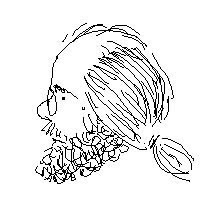
Normal things, like listening to Garrison Keillor while cooking, or looking at a movie, were becoming high irritants. After fleeing a movie Cyndia was watching, The Hobbit, I climbed into bed, very discouraged, fearful, feeling once again like I couldn't deal with this stuff. The Tolle ideas that had helped earlier with anxiety weren't up to meeting this challenge. But lying there I realized, I can't just passively accept this deterioration. I got up and ate a whole banana, hard as it was to eat anything, knowing that bananas tend to produce constipation – it worked, the diarhea was almost immediately gone. My spirits lifted along with it. To an extent. All through treatment I had disturbing dreams and dream scenarios where I was doing repetitious, meaningless acts as though it were super important that I keep repeating them. Every hour, sometimes more frequently, I had to get up to pee. I would get into bed and say, OK, I'm warm (it was winter), I'm comfortable, now rest. This despite fits of coughing sometimes, very sore and sensitive throat and tongue, “sunburned” neck, beard loss, hair coming out in clumps (though I didn't completely lose head hair). I had to shave to be fit for the mask and it didn't grow back for months. Still have no hair under my arms and the beard is skimpy.

A throat specialist coached me to do daily exercises. She said that side effects can produce an inability to swallow properly, getting fluid into the lungs and risking pneumonia. White fungus-like accumulations grew in my mouth and throat and there was frequent rinsing and gargling necessary to keep this at bay. At first I tried to keep up my regular routine, songwriting, blogwriting, political cartooning, reading but gradually it became a full-time job, doing the hydration, nutrition and hygeine, along with rest. I could hardly speak toward the end and had to limit conversation, avoiding answering the telephone, relying on email – and of course it was just then that my email program crashed and I had to rely on a very clumsy alternative. The kindness and concern of friends and relatives astounded me during this period. I appreciated this but also, in the worst periods, avoided as much as possible contact with other folks. Because I just had no energy for it and also because I was worried about exposure, with my lowered defenses, to colds and flu etc; Somehow, fortunately, I avoided all that. I was determined, while I could, to take Marta into treatment. One day I saw a woman carrying an infant rush over to a trash can and throw up. I carefully avoided her and others on the train who could pass on their ailments. Eventually a pre-arranged list of my neighbors took turns transporting me to treatment, as I became so weak I couldn't do the walk nor driving myself.

I doubt that I've communicated the enormity of my nightmare, now mostly passed. Anxiety, fear, dread psychologically, along with physical discomfort, stress and pain. And I'm of course not alone. When I would sign in for treatment in the morning there were others waiting ahead of me, and soon behind me, a steady uninterrupted stream, all day. Some holding up better than others but all affected, worn down, sometimes to extreme fatigue. One day one person was on a gurny awaiting transport to hospital and this seemed hanging over all of us if we slacked off in our regimen. We were told that it really hits the third week and gets worse right up and beyond the last treatment (where you were awarded your mask as a mark of completion). This I can attest, was absolutely true. The staff, doctors, nurses, technicians, were all fabulous, nurturing and empathetic, coaching and encouraging all with a good natured humor. The chemo team rang a bell for my last treatment and insisted I do a little dance. I felt in good hands from day one. Of course they're not gods, they make mistakes, have bad days and there are often long waits for brief meetings, lots of picking and sticking, bloodtests, throat tests, scans, the rigorous treatment, depression and fickle weather, parking, transportation malfunctions... all often a trial. But it sure feels good to come out the other end alive.

Through a non-profit called 4th Angel I was assigned a mentor who had been through the same treatment I was about to undergo. Mike was an incredibly articulate guide who helped me navigate. His emails always cheered me up and helped me keep in mind that this too shall pass. I naively expected maybe two weeks of recovery after treatment ended February 27. Mike cast serious doubt on this estimate. By late April I began to attend music jams again but had to leave earlier than previously. My voice was easily strained but as it came back I noticed that it was now a step lower in register and, as others would comment, sounds amplified compared to before. I need an afternoon nap most days. My endurance is less but improving. In late May it was a grand thing to hear Dr. Patal say, “You don't know how good it makes me feel to tell you that your scan results show zero cancer.” I am apparently one of those susceptible to this viral form of cancer. I asked him whether, since I'm susceptible, isn't there a high chance I'll get it again. He said, “Very unlikely.” I suppose the incubation period is longer than I probably have left to live.
It took the longest time for the pain in my throat and tongue to clear up, still not 100%. That and taste are the lingering issues. It isn't that I can't taste food, it's that so much tastes really bad and the slightest seasoning puts fire to my tongue. For a long time I could only eat bland hot breakfast cereals. For some reason I could tolerate, even enjoy, cheese grits all through. Now anything cheesy, potatoey is good. I've had pesto and quiche to good effect recently, even pizza. Over the past two months I've seen great changes where a little salt was firey to where today I had some salted almonds and they were fine, some onion on a veggie hot dog. Soon I might be back to the wonderful jalapeno. But food invariably disappoints me, looking like what it is but never living up. I was told that I could lose as much as 20% of my taste permanently. We shall see. I'm interested in coffee once again and it is almost as it used to be. Maybe this is an opportunity to rethink some food choices. I'm vegetarian but still eat dairy and sugar. I've lost nearly forty pounds, something I could never seem to do under my own volition and I am determined not to backslide. I can drink a little wine if I water it down. And until my eating is closer to normal I'm still supplementing with energy drinks leaving me those, water and coffee, so far, as the only thing I can really drink. With this gradual return to normalacy (near-normalacy), I expect my harsh ordeal of the first half of 2015 will fade into its measured place, with everything else, in the great field of being – insignificance.


Monday, January 26, 2015

House of Outrageous Fortune, Michael Gross, a review

 
This is a book about the 1%, the billionaires, or some of them, who can pay $50 million for a condo they use a couple weeks a year while otherwise camped in one of their other lavish homes. Mitt Romney accused ordinary people of feelings of entitlement when they expect social security and medicare but Mitt was playing to his audience, the true practitioners of entitlement. But this is not a political book. The wall street protests are mentioned in passing but its focus is the acquisition of Fifteen Central Park West property, the construction of the outstanding structure and the selling of its units to the aristocracy of money. That oligarchy ranges from celebrities like Sting and Denzel Washington, Wall Street tycoons, rags to riches immigrant billionaires, heirs, Saudi Royalty, Jewish entrepreneurs and foreigners seeking a stable place to flee should their little dictatorship fall apart. Mini-bios of the developers, bankers, architects and many purchasers occupies a fair part of the book.

To demonstrate that this project cost some money and byzantine maneuvering, a section on the wheeling and dealing necessary to get the land and city permits, financial backing and partners in place is narrated. A sub-story of the last three hold-outs at the Mayflower Hotel, which sat on the otherwise empty lots, is included where two were given a million dollars each to vacate and the third held out long enough to be offered and finally accept $17 million. This is not just heady, this is stratospheric financial opera.

Whenever I encounter splendid architecture, whether the Parthenon or 15CPW, my response is always twofold: first admiration and then lament that the same energy could have gone into social justice. There was never any danger of that here. One of the billionaire occupants switched his allegiance from Democrat to Republican before 2008 over the single issue that Obama was calling for some minor regulation of the market rules. I express this over and over again, my befuddlement over people who have more money than they can ever spend worrying themselves crazy over a little tax, or a simple regulation designed to protect investors from predators. The idea that they are driven, at root, by fear takes on credibility in the face of such irrational behavior.

The architect, Robert A.M. Stern, modestly claims that city code created the building, requiring the lower “house” on the park and the tower behind. But it was the developers, brothers Arthur and Will Zeckendorf who backed to the hilt the architect's insistence on the expensive Indiana white limestone against the bean counters at Goldman Sachs, the chief financiers. Much ink is spent on the developers and their family history, descendents of famous developer “Big Bill” Zeckendorf, who went bust in his endless juggling of projects, meshing, or not, with economic trade winds. Bust of course doesn't mean penury for the super rich. Their father too went belly up when his ambitious plans met the wrong economic trade winds. The brothers thus developed cautiously yet with a persistence and ambition that, so far, has served them well. The profits on Fifteen Central Park West are enormous, the price-per-square-foot reaching unprecedented numbers, $10,000 and rising. One penthouse apartment went for $80 million. The term “flipping” is where purchasers sell their units. No one re-sold and less than doubled their investment. Some “flipped” without even moving in. One $9 million unit sold two years later for $29 million. The buildings cachet almost guarantees a never-ending value increase.

There are some smaller units but most occupy half a floor with many purchasers buying a “duplex”, meaning the whole floor. Then there are the penthouses on top of the House and tower, situated such and so expensively that one could claim, credibly, to be living on top of the world. Imagine spending millions on a brand new “apartment” then gutting it for redesign. Many did. The cartoonist Lurie for example ripped out all the walls and replaced them with glass so upon entering one has an immediate panorama view of the park and skyline. One of the tenants has signed the Gates/Buffet pledge to leave money to charity. Another sold his unit, pledging the profit to subsidize anti-poverty work in New York. Still another called for reinstatement of the Glass Steagle Act, the man who more than anyone else, was responsible for its repeal. So there is some conscience at Fifteen Central Park West, or guilt, but mostly it seems to be occupied by those who look through the reverse telescope, the distorting lens of Mitt Romney. But hey, they're pretty nice people once you get to know them, if you can afford the proximity.

Sunday, December 7, 2014

Dirty Wars: The World is a Battlefield, Jeremy Scahill, Part 1.

Jeremy Scahill begins his book, Dirty Wars, by confirming that Bush-Cheney-Rumsfield cherry-picked intelligence to justify their disastrous invasion of Iraq, an intention formed well before 9/11. The infamous attack served only as an excuse for their “imperial” ambitions. Interesting that these three chicken hawks, an almost compulsory resume item for the whole administration, took up an especially macho obsession with war and black ops, secret, usually violent and ethically challenged operations. Their projects involved lawless behavior completely at odds with the smug rhetoric these same actors routinely used for public relations purposes. In fact their behavior is exactly what they claim to be fighting against. Just as their compliant lawyers were tasked with justifying an invasion of Iraq where no justification existed, the same clever dudes were asked to explain how torture and murder are not torture and murder.

What they were justifying was, indeed, indistinguishable from Mafia Inc.'s style of exercising power except in scale, much larger. The cabal that got us into Iraq seems as interested in power and money as their colleagues in organized crime. Neither “team” seems however to ever get enough money or power so we can probably assume an addictive component also.

The macho approach, according to Scahill's research, may have momentarily titillated top administration officials, but nearly always produced results the opposite of claimed intent. Or the focus was so narrow that outcome was guaran-damned-teed to create chaos and demonstrate the truth of the dictum that violence begets violence. Supporting warlords in Somalia with weapons and funding in exchange for their assassination services was both obviously immoral and ineffective, since they murdered virtually anyone, target-list or not, for the money... they played the U.S. as anyone would expect a gangster to do. So the consequences are there to be seen in Somalia today, a very different place than it might have been. Al Qaeda and Islamic fundamentalism were strengthened rather than defeated by Mafia tactics.

So in Afghanistan, a list of Al Qaeda and Taliban leaders to be captured or killed grew into a list of thousands, most of whom had no previous relationship to either. The ruthless pursuit of this kill list alienated the population such that enemies grew exponentially, both in Afghanistan and Iraq. The world could probably be added to that list, or at least anywhere U.S. forces operated. Early in the book the radicalization of a moderate Islamic leader, a U.S. citizen, is sketched, a radicalization essentially brought about by these same mindless macho tactics.

JSOC (Joint Special Operations Command) was special all right, a military unit whose original function was to provide a versatile, small unit for little military incursions for the president. It grew out of the failed Iran hostage rescue operation. A little place in Texas called Waco received a friendly visit from JSOC. This was the core out of which the White House macho team created its secret dark ops, and capture/kill lists, drawing personnel from Army Rangers, Green Berets, British Commandos and Navy Seals. Another unit provided more outlet for bottled up chicken hawk energy, JPRA (Joint Personnel Recovery Agency). Surprisingly they didn't rename it SS – maybe too much of a tell.

JPRA had one handy set of particular skills: they were expert in torture techniques so as to train U.S. troops in resisting them. All that was needed was to reverse engineer the program and voila, back to the middle ages. Now we knew what to do with Sadaam's torture chambers. Incorporated into JSOC, the unit could now spend 14 hour days capturing and interrogating “suspects”, 70 – 90% of whom they KNEW were completely innocent. Yet they subjected all to the same gruesome medieval horrors practiced, in U.S. mythology, only by bad guys like Stalin or those barbaric Japanese of World War II., Nazis and other official enemies. The credibility of the U.S., to the degree that it had any, was severely undermined by these decisions and by the patently false denial at the highest level. Recall George W Bush's shameless statement, “The U.S. does not torture.” JSOC commander, General Billy McCrystal contributed also by denying in his memoirs the lawless behavior that he oversaw. Ironically McCrystal was opposed to the invasion of Iraq, seeing what the chicken hawks could or would not. Colin Powell also, though hardly a dove, opposed the macho posturing of the inner circle. Thus JSOC was partially a work-around, reporting directly to Rumsfield-Cheney, avoiding the “softies” in the upper echelons of the military and the need to report to congress had they used the agency normally at home in that world, the CIA.

JSOC's first interrogation center, NAMA, was at a Saddam-era military base outside Baghdad. It became the model for Abu Graib and other “facilities” along with other dark sites around the globe. The model then trickled, in small or greater measure, out to the larger military operations. You may not have a need-to-know what went on in these “camps” and you probably don't want to know, yet, since it was all done in our name we are implicated and perhaps need to face up to it. We certainly should stop it.

At this point I am 200 pages into a 524 page book so... more to come. The book does not evade the fact that the U.S. has a genuine “enemy” and it does not, so far at least, address the question of why. It makes clear however that the methods used to attempt resolution only exacerbated the problem. These methods are the same ones utilized by previous colonial powers whenever their subjects began to resist occupation. The unsavory was necessary, in the oppressor's view, to preserve their privileged, inequitable domination.

Can this “enemy” be defeated militarily? Doesn't look like an affordable project. Can this “enemy” be brought into dialogue for win-win outcome? Not if our goal remains domination.

Wednesday, November 26, 2014

ARTicle: Pop Art


According to art historian Sam Hunter, Pop Art is an “original and irreverent parody of the imagery and artifacts of commercial culture.”

The germ of Pop Art lay in the work of one of Abstract Expressionism's finest painters, Willem de Kooning. His use of women as points of departure for painting triggered work by other artists which brought back “subject matter” into painting.

San Francisco artist Richard Diebenkorn produced paintings in the 50s which resembled Abstract Expressionism with a geometric division of the picture within a portrayal of interior scenes and landscapes. You could see it as scene but you were constantly reminded that you were looking at paint by the way it was painted – a heavy impasto and loose, painterly application.

Larry Rivers introduced meticulous drawing, of Washington crossing the Delaware and other North American folklore – this embedded in a loosely-painted style. Robert Raushenberg added to that style rags, fragments of comic strips and other discarded materials. His first “assemblage” was his own bedding, a sheet and quilt that he nailed to the wall and painted on. Despite the earlier Dada movement this work shocked the public. A later assemblage included a stuffed goat with a tire around its waist.

Jasper Johns, a contemporary and friend of Raushenberg, took as his subject two-dimensional objects such as flags, numbers and targets. To these he added shelves on which he placed real objects – spoons, cast plaster faces, beer cans. The consistent quality of Johns' work is its elegant craft. Johns and Raushenberg tied together the strands of Abstract Expressionism, Dada and Surrealism as a bridge to Pop Art.

True Pop burst forth in 1962 in exhibitions in New York City, primarily at Sidney Janis Gallery. James Rosenquist was a billboard painter and his huge paintings look like close-ups of advertisements. Roy Lictenstein painted single frames from comic strips, an “Oh Brad” from a syrupy love story. Later he was to use the comic book style, with its ben day printing process, to parody famous modern paintings.

Jim Dine continued the Abstract Expressionist style but used it to present commonplace objects, like pliers, a hatchet, palette, coat hanger, valentine heart, bathrobe. What stands out with Dine is his mastery of drawing.

Claus Oldenberg gave us soft sculpture. He would render a telephone, a hamburger, hot water bottle or other everyday objects in materials that made them look like they were melting or had collapsed. He has done commissions for many major cities. In downtown Philadelphia there is a huge clothespin, this one in steel.

Andy Warhol is the Pop Artist's Pop Artist and the most famous, and outrageous, of the group. His debut exhibit featured sculpture; wooden rectangular forms with silk-screened images of Brillo Pad boxes, stacked up as if in the grocery. Even more well known were his Campbell's Soup paintings which simply depict rows of the stacked soup cans. Warhol went on to bring images of movie stars (notably Marilyn Monroe, Elvis), politicians (Mao), car accidents, the electric chair and money. He called his studio The Factory and hired assistants to help produce his art. He also began making films, just as controversial as his paintings. Setting up a camera facing the Empire State building he produced an eight hour “documentary”. This he titled “Empire”. He put actors nude in a restaurant scene, pointed the camera and directed them to improvise. “The Nude Restaurant” was then whatever happened on camera.

Warhol sought publicity, doing things the art world tended to shun, like endorse commercial products. But even these were transformed by his presence, as with the soup cans. Him just sitting there, blankly and blandly staring at the camera, forced a thoughtful response to what otherwise would be commonplace. His presence may not have increased product sales but it served to amplify his fame, not to mention wealth.

The artist also authored books, did speaking engagements (once creating an uproar by sending someone in his place, posing as him) and publishing Interview Magazine, an oversized collection of interviews with celebrities which pre-dated the supermarket celebrity mags like People.

While Warhol was making endorsements, movies, paintings, portraits of the rich and famous, he was also accumulating a tremendous collection of art himself. He frequented the auction houses and antique shops, buying a bewildering variety of objects from an equally diverse range of history. After his death in 1988 his collection was auctioned off and a foundation set up to provide grants to artists to further their careers. An Andy Warhol museum was sited in his hometown, Pittsburg.

The Pop artists took a look at and commented on the popular and commercial culture. The gullibility of the “consumer” to Madison Avenue marketing techniques which promote an obsessive material acquisitiveness were held up to parody. It is interesting that the essential Pop artist himself succumbed to the obsession. Perhaps he wasn't as “ironic” as was supposed. Or maybe this was just more irony.

This ARTicle first appeared in the Dublin Georgia Courier Herald in 1989, in a slightly different form but with the same illustration.

Thursday, November 20, 2014

ARTicle: Abstract Expressionism


Abstract Expression emerged in the late 1940s, growing out of the influx of European artists fleeing fascism, and the theories they brought with them. It was the second wave of European modernism, the first not having caught on here 30 years earlier.

The idea of painting “automatically”, without thinking, without plan, drawing from that part of the brain where we dream – that Surrealist notion was used by the Abstract Expressionists but they left out the dream images, they just “automatically” put paint on canvas and moved it around until it seemed like time to stop.

Many of the painters had studied various eastern philosophies, especially Zen Buddhism. Another influence, the existential philosophy of Jean Paul Sartre, where the individual is seen as alone in the universe, creating meaning. Contemporary writers were similarly motivated, especially those known as the Beats, Jack Kerouac and Allen Ginsberg. They overlapped with the musicians of that time and city such as the Jazz of Thelonius Monk.

So these painters stood before their blank canvases, looking for that “right” arrangement of paint. Failure to find it spelled deep anxiety for some. More than a few were to commit suicide.

The largest collection of work from this period can be seen in the Museum of Modern Art in New York city. Most Art museums in major cities have followed MOMA's lead, gathering a collection also. The prices now are astronomical, blue chip, often in the millions. When the paint was still wet they could be had for a few hundred dollars.

The chief artists of the movement, sometimes called Action Painters, were a varied crew. Jackson Pollock is famous for his drips and splatters. “My child could do that.” was and is still uttered before this work sometimes by the unbelievers (like the writer Tom Wolfe who wrote a disparaging, philistinian tome called, The Painted Word). Others opine, “It looks like a dropcloth.” In a way they do. Jackson would lay the canvas flat on the floor and drop paint while walking around it or from step ladders, creating meandering swirls. What he did was what all painters do, choose colors and put them somewhere. The finished canvas is judged by the same standard as other art, the total effect. No one before Pollack thought to apply paint the way he did. Anyone since who tries it will likely be considered an imitator. He sort of has the patent. Pollock had a serious alcohol problem and was killed in a car accident in 1956, possibly a suicide.

Mark Rothko represents another strain in the movement, more mystical and other-worldly than Pollock. His most mature work consists of horizontal bars of color seemingly floating in space. Amazingly he agonizingly doubted the value of his work and became another suicide statistic.

In the east there is the idea of a Mantra, an image to stare at or word to chant which helps one enter a trance-like state to experience the unnameable, the godhead, field of being or whatever word you might use to point at the ineffable. That idea is present in various way in this movement. With Pollock's paintings you are aware of the action of the painter, the trail of the physical act of painting. With Rothko you are more transported to a place of contemplation.

Another painter in the movement was Willem De Kooning, a virtuoso akin to a great violinist. His most well-known series used the frenzied expressionist application of paint to depict semi-abstract, grotesque women. Later in the 50s he did huge and wonderful abstractions, breathtaking blowups of his skilled brushwork.

Other artists were Arshille Gorky, a painter of exquisite and calm abstraction (unlike his life which also ended in suicide); Franz Kline, known for his large, powerful works in black and white; Helen Frankenthaler with her streaming and layered bands of thinned down paint; Grace Hartigan's confident and deft sensibility; and Barnett Newman for a geometric look that eventually evolved into a sparse, single vertical line. Many other painters worthy of study produced works as part of this movement. One wonders what kept them going (those who did keep going) given their almost complete lack of monetary reward. But their impact on the western world was tremendous. They changed the way painting is defined, what we expect a painting to. They transferred the world art capital to New York City, and they enriched us by what they left behind.

This article was written originally for the Dublin, GA Courier Herald in 1989.

Friday, November 14, 2014

ARTicle: Picasso, 1881 - 1973


When Mozart was three, the story goes, he watched his father give his sister a piano lesson, after which he sat down and played it from memory. Genius sometimes makes itself felt early.

There is a museum in Barcelona of Picasso's work. When he was only ten years he was painting small neighborhood scenes – a view of a road on a hill, some chickens... He was already doing several paintings a day, a pattern he maintained most of the rest of his 93 years.

The paintings were amazingly competent. Picasso's father, it is said, a teacher and painter, gave up painting when he saw that his young son had already surpassed his talent.

At the turn of the century, 19 year old Pablo arrived in Paris, capital of the art world. This was a time when Paul Cezanne, Vincent Van Gogh and the impressionists were finally being recognized, in advanced circles, as important artists. Picasso quickly tried all the styles and by 1905 had evolved into what is called his blue period – melancholy paintings in cool blues, prompted probably by a friend's suicide and his extreme poverty.

His palette gradually lightened into gay pastels, his rose period. The poverty was not to last. A wealthy North American writer, Gertrude Stein, took him under her wing (as she later did Hemingway). She purchased many of his paintings and promoted him to others.

Picasso was to become the richest and most widely known artist of all time but his early career was marked by great shifts that confused and alienated many of his supporters. By 1930 he had more or less settled into a style. He had another 43 years to live and work.

In 1906 he did a large panting that shocked even his radical friends. It depicted several standing women in a strange flattened style. The faces were grotesque and mask-like. The artist had seen an exhibit of Pacific Island sculpture and found in it a powerful source for his art. He kept this painting, Les Demoiselles d' Avignon, out of sight, continuing to paint his scenes of circus and theater people. But even into these began to appear the new influence.

The painter Paul Cezanne, who died in 1906, had evolved a style of painting that heavily influenced Picasso. Cezanne would color his pictures without slavish regard to the objects being depicted. An apple might be red, then again it might be blue. Another more important aspect of his work was the fact that he would move his easel from time to time while working on the same painting. This created distortion and flattening of perspective which Picasso took much further.

He began to simplify and flatten, so that the paintings came to look like a view through a shattered window. His friends Braque and Juan Gris joined him in this series, creating what came to be called Cubism.

At first Cubism was loose, groping and awkward. Later it became very refined and later still it evolved into a flat play of colored shapes which still referred to things in the world (a guitar, a portrait, still life) but were so abstract that the colors and shapes could be enjoyed just for themselves.

Interspersed throughout Picasso's career was another style. It ranged from a very fine descriptive, linear drawing (portraits, figures on the beach) to cartoonish and playful scenes of dancers, frolicking families and circus troupes. Sometimes the two styles came together in the same painting. Picasso's subject and approach was extremely broad as were his ventures beyond painting into pottery, printmaking and sculpture.


Picasso will be remembered for his immense output – thousands of paintings, drawings, prints, sculpture and pottery, and for his unique touch. He had many imitators, and in the beginning he imitated and learned from other artists but his style became unmistakably his own. His mark on history, what remains of it, is assured.